Dead-end structures: why they're the tell for a new line tie-in
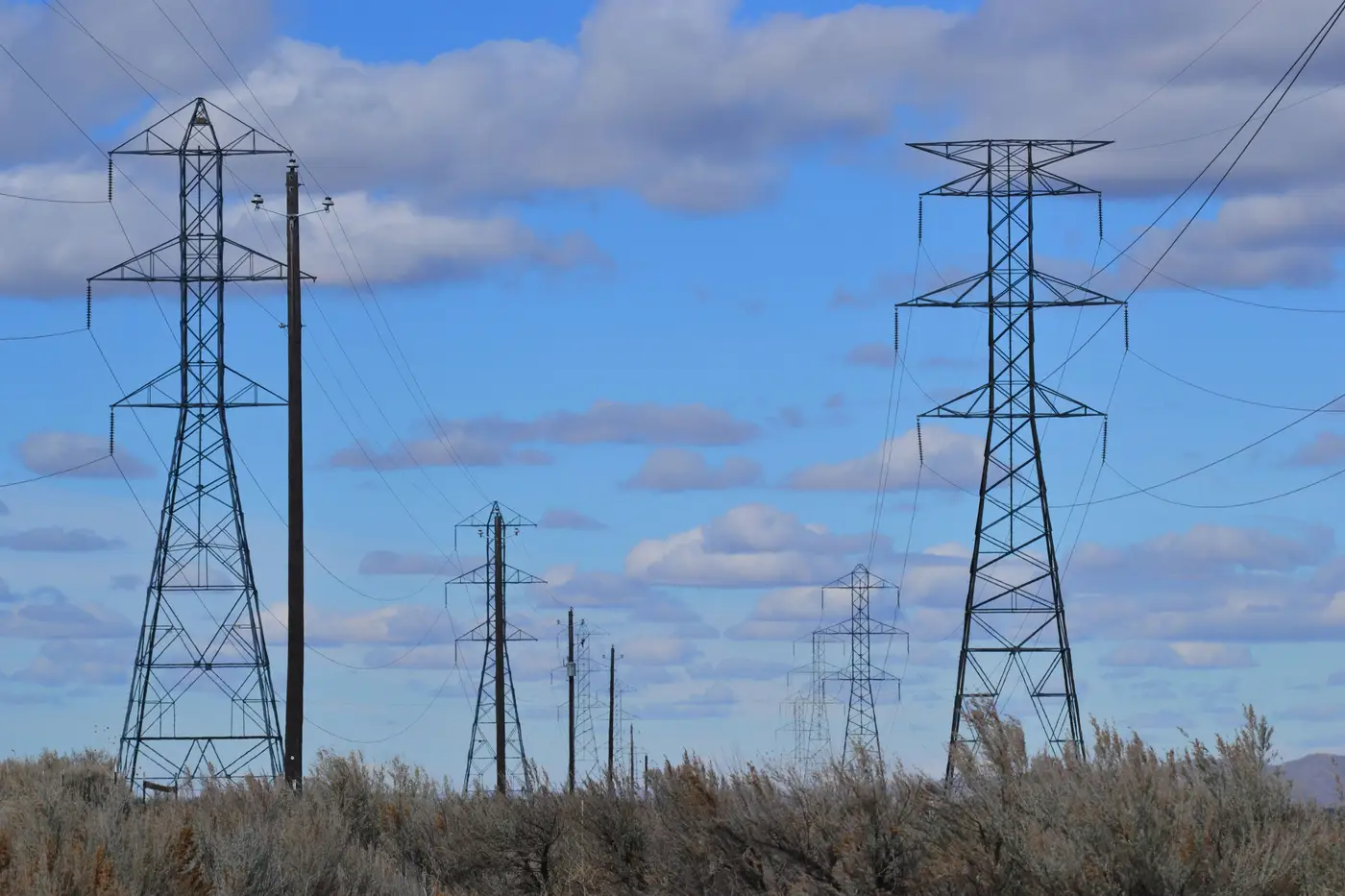
If you've spent time walking a line or reviewing as-builts, you already know most structures on a transmission corridor are just holding the conductor up through a straight run. A dead-end structure is doing something different. It's anchoring the full tension of the conductor, the way a dead-end does on a fence line. Everything on one side can go slack and the structure still has to hold.
That's why a dead-end shows up wherever a line stops, starts, turns sharply, or connects to something new. A straight run of tangent or suspension structures doesn't need that kind of anchoring. A terminus, a running angle, or a tap point does.
Dead-end tower vs. tangent structure
A tangent structure carries the conductor through on suspension insulators that hang more or less straight down. The load is mostly vertical. A dead-end tower (also called a strain tower or termination structure) carries strain insulators set horizontally, in line with the conductor, because the structure is resisting pull in one direction rather than just supporting weight.
Visually, from the ground or from imagery, the giveaway is the insulator geometry. Strings running parallel to the conductor and angled back toward the structure body, rather than hanging vertically, mean the structure is designed for tension, not just support. Dead-ends are also heavier and often guyed, because they're carrying load a tangent structure was never built for.
Why a new dead-end means a new tie-in
Utilities don't build dead-end structures for no reason. A new one on an existing corridor usually means one of a few things: a line tap, where a new feeder or interconnection splits off from an existing circuit; a new terminus into a substation yard that didn't have that circuit before; or a getaway structure built to route conductor out toward a new line that hasn't been energized yet.
A line tap structure is a dead-end by definition. The new line has to anchor its own tension independently of the circuit it's tapping, so you'll see a dead-end on the existing line right at the tap point, paired with a fresh dead-end or series of structures heading off at an angle, often toward a cleared right-of-way that wasn't there on the last pass.
For capacity tracking, that timing gap is the whole point. Interconnection filings tell you a tie-in is planned, sometimes years out, and sometimes not at all if it's a neighboring utility doing it on their own system without filing anything you'd see. A new dead-end structure, a cleared spur heading off the main corridor, or a new termination bay in a substation yard is physical construction, already happened or happening right now. Imagery catches that before the paperwork does, and sometimes it's the only record you get if the work isn't yours to file.
What to look for in a footprint pass
Watch for:
- A new structure on an established straight run where there wasn't a dead-end before, especially with strain insulators and guy wires.
- A cleared corridor spur branching off at an angle from the existing line, even a short one.
- New foundations or structure pads near a substation fence line that weren't there last pass, particularly where they align with an existing circuit's path.
- A getaway structure built facing open ground, no line strung yet, which usually means the tie-in is coming but construction is ahead of energization.
None of these show up in a single image. You need the before-and-after. That's the whole reason comparing one pass to the last one catches a dead-end structure going in that a single snapshot would just read as "a tower."
If you're trying to get ahead of capacity build-out on sites you can't walk, and interconnection filings aren't cutting it, this is exactly the kind of structural change our quarterly substation comparison is built to flag. Run your own sites past it and see what shows up between passes.