What is a bay in a substation, and why planners count them
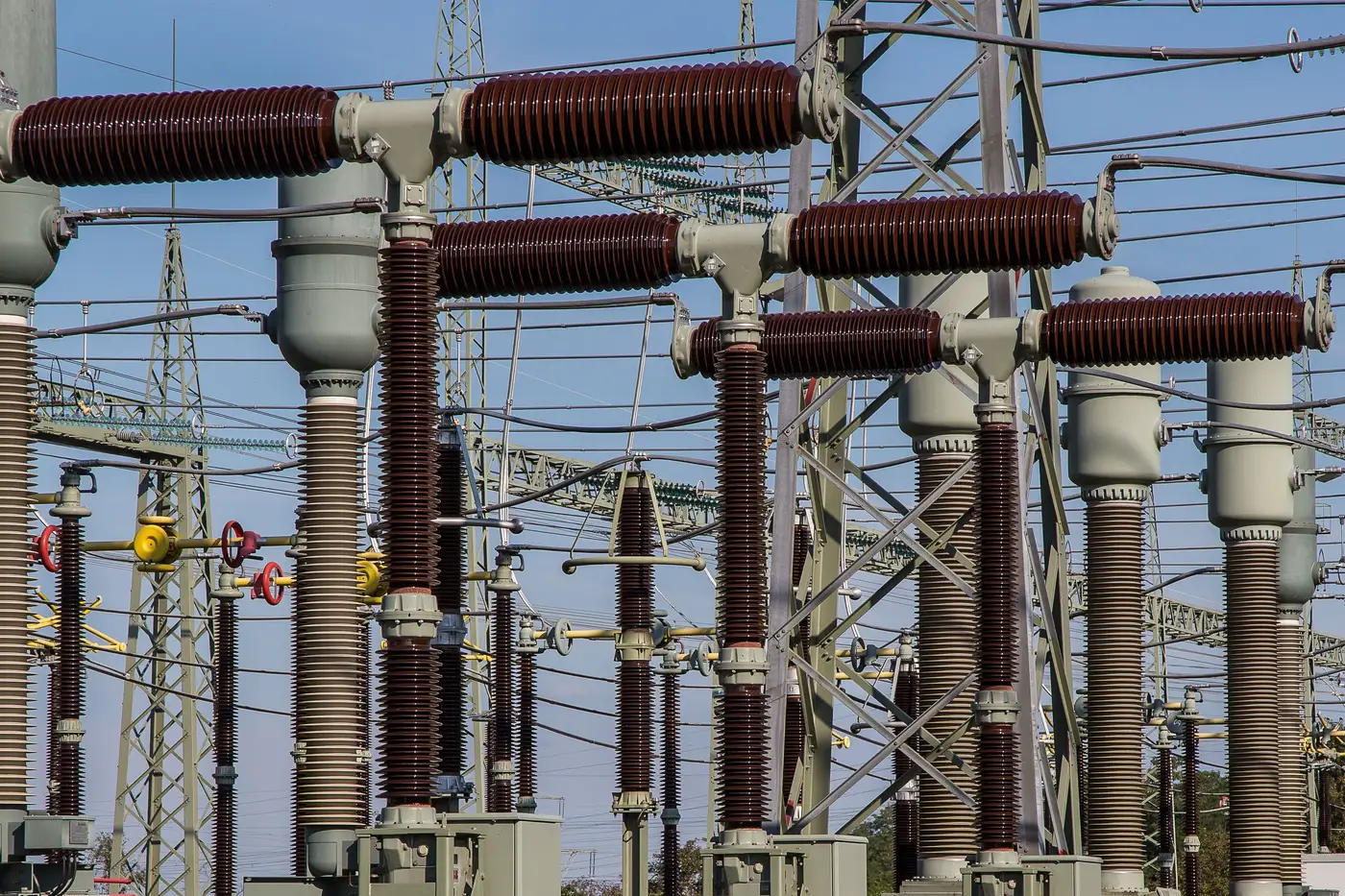
A bay is the basic building block of a substation's switching yard. It's the vertical slice of equipment, disconnect switches, circuit breaker, current transformers, bus connections, that serves one line, one transformer, or one capacitor bank. Walk a yard and you can usually count bays the same way you'd count parking spaces: each one is a discrete unit tied to a single piece of apparatus, even though the bus overhead ties them all together electrically.
Planners use "bay" as shorthand for capacity in a way that's more useful than nameplate MVA alone. A 230 kV yard with six line bays and two transformer bays tells you something concrete about how much the site can take on before someone has to go buy more steel and switchgear. Add a bay, and you've usually added a line position, a transformer position, or a reactive device position. That's why bay counts show up in planning studies long before the interconnection queue catches up.
Bay configuration substation types
Not every bay is wired the same way, and the configuration tells you how the station handles a breaker failure or maintenance outage.
- Single bus, single breaker. One breaker and one bus per bay. It's the cheapest scheme to build and the least forgiving one if that single breaker trips or needs maintenance pulled.
- Main-and-transfer bus. A second bus and a transfer breaker let you swap a line onto the spare bus while the normal breaker is pulled for maintenance, without dropping the circuit.
- Ring bus. Breakers form a closed loop, with each bay sitting between two of them, and the ring can usually absorb one breaker outage without losing a line.
- Breaker-and-a-half. Two buses carry three breakers for every two bays. Most utilities default to this scheme at EHV voltages because it survives both a breaker failure and a bus outage without dropping a circuit.
- Double bus, double breaker. Every bay gets two full breakers tied to two separate buses, which makes it the most reliable layout and also the most expensive, usually reserved for critical EHV stations.
Breaker-and-a-half bay, in practice
The breaker-and-a-half scheme is the one that trips up people new to reading yard layouts, so it's worth walking through once. Picture two parallel buses running the length of the yard. Between them sit sets of three breakers in a row, with two bays, each feeding a line or a transformer, tapped off the middle connection between breakers one-and-two and two-and-three. The center breaker is shared between the two bays, which is where the "and a half" comes from: each bay effectively gets one and a half breakers instead of two.
The payoff is that you can lose any single breaker, including the shared one, and still keep both circuits in service by reconfiguring. The cost is more steel, more relaying, and a bigger footprint, which is exactly the kind of yard expansion that shows up clearly on a footprint pass: new breaker positions laid out in that characteristic double-row pattern, well before the interconnection filing catches up with what's already poured.
Why bay counts matter for capacity build-out
If you're tracking a neighboring utility's station, or even keeping tabs on your own field crews between formal updates, bay count is one of the cleanest proxies for added capacity you'll find without pulling a one-line diagram. A new transformer bay under construction means a new transformer position is coming online, whether or not the paperwork has caught up yet. A ring bus getting rebuilt into breaker-and-a-half means someone decided the station needed better reliability margin, which usually tracks with a load or generation increase that justified the spend.
The trouble is that none of this shows up in the interconnection queue until the project sponsor files, and by then construction is often finished. That gap is what Grid Change Monitor's substation capacity tracking page is built to close: it compares each substation footprint pass to the last one and sends a quarterly change list flagging new bays, transformer additions, and yard construction at sites you can't walk into and can't get a straight answer on from the other utility's planning desk.
If you're staring at a yard layout trying to figure out what just got built there, that's the read we're set up to give you.