Construction or teardown? Reading a substation site from the air
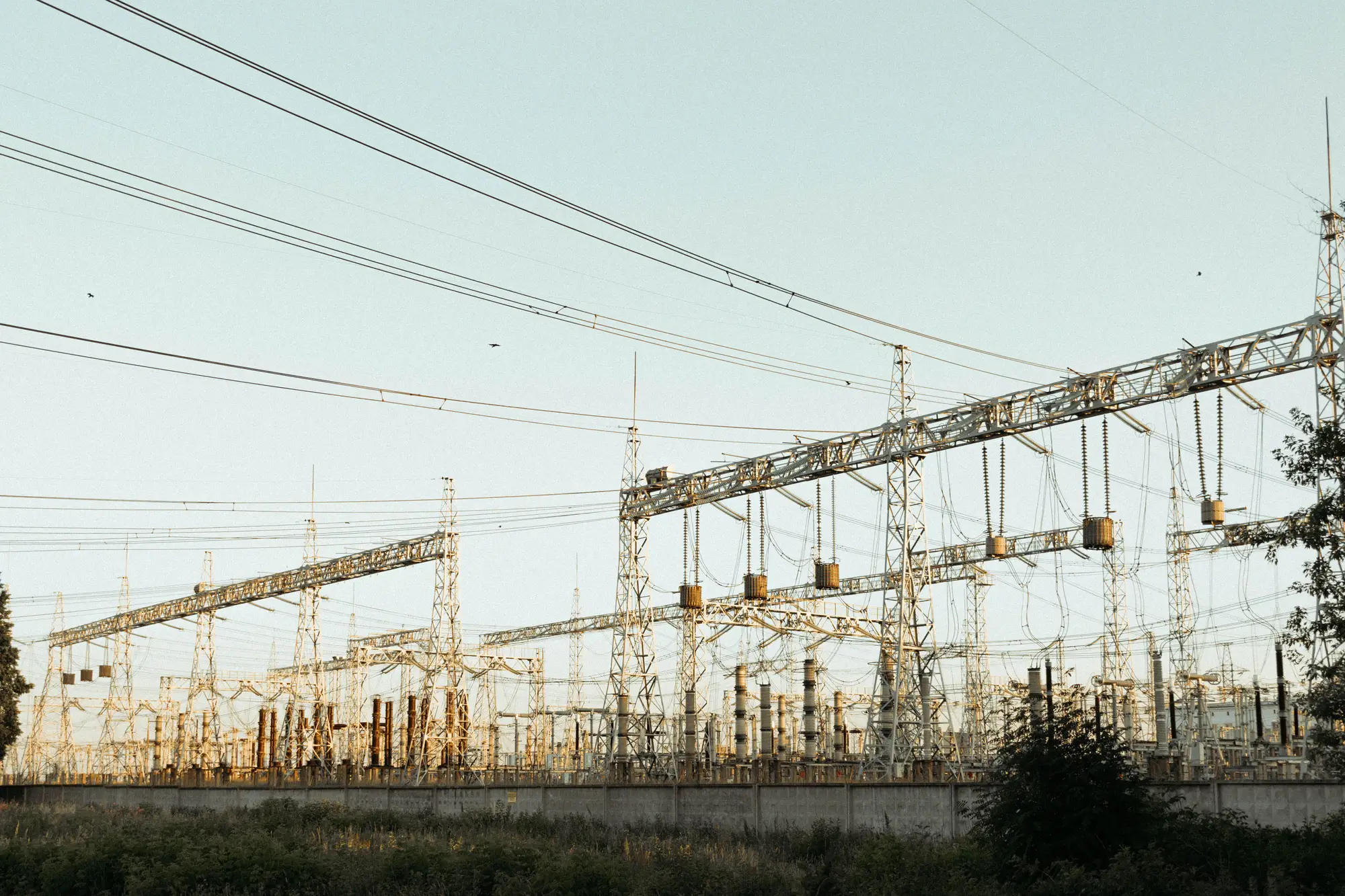
A gravel pad, a few trenches, some equipment missing from the yard. At first glance, a substation mid-construction and one mid-decommissioning can look like the same kind of disturbed site. Both involve crews, cleared ground, and a yard that doesn't match the last image you pulled. The difference is in the direction things are moving, and once you know what to look for, it's not that hard to read from a single pass or two.
What build-out looks like on the ground
New capacity work tends to start with civil activity before anything electrical shows up. Look for:
- Fresh grading or a gravel pad extension beyond the existing fence line, often squared off and sized for a bay or two, sometimes with a stormwater basin cut nearby that wasn't there before.
- Rebar and formwork for transformer foundations or breaker pads. These show up as pale rectangular or square shapes with a gridded texture, usually before any equipment arrives.
- Laydown yards just outside the substation footprint. Crews stage transformers, structural steel, and spool trailers somewhere close by before they move the gear inside the fence, and that staging area is often the first thing you'll notice.
- Conduit trenching, visible as long straight scars running from the control house toward a new bay location.
- A crane or boom visible in a single pass, parked near a foundation or transformer pad.
If you're seeing steel and concrete appear where there was bare ground last quarter, that's build-out. The yard is filling in, not emptying out.
What decommissioning looks like instead
Teardown runs the opposite direction, and the tells are mostly about things disappearing rather than appearing.
- Empty transformer pads. A foundation that still has the right footprint and oil containment berm, but no transformer sitting on it anymore, is a strong signal. Oil containment rings are distinctive enough that you can often spot the gap even at sub-meter resolution.
- Disconnected bus work. Structures still standing but with gaps in the overhead conductor runs between them, or insulator strings missing from one bay while the rest of the yard looks normal.
- Scrap and salvage staging. Piles of structural steel, spools of removed conductor, or stacked insulators sitting in a corner of the yard that wasn't a laydown area before. This is the mirror image of a construction laydown yard, and the two can look similar from directly overhead, so check whether equipment is arriving or leaving relative to the prior pass.
- Fence line pulled in or a reduced footprint. Utilities sometimes shrink the fenced area once a portion of the yard is cleared, especially at older sites being partially retired rather than fully abandoned.
- Vegetation reclaiming gravel. On a longer decommissioning timeline, grass and scrub start coming up through gravel that used to be kept clear, which is a slower tell but a reliable one if you're comparing passes a year or more apart.
The practical rule: construction adds mass to the yard over successive passes, decommissioning removes it. When a site has both happening in different bays at once, which does happen on brownfield upgrades where a utility replaces older gear while building new positions, go bay by bay rather than judging the whole yard in one read.
Where this gets hard without a change list
A single image rarely settles it. A gravel pad could be new construction staging or a demolished bay waiting to be regraded. An empty foundation could mean the transformer hasn't arrived yet, or it was just removed. What resolves the question is the comparison: what was there last pass, and what's different now. That's the whole value of tracking a site over time instead of judging one still image in isolation.
That's the gap Grid Change Monitor fills for planning analysts who need an early read on a neighboring utility's capacity work, without waiting months for an interconnection filing to confirm it. The site-by-site change list flags new bays, transformer additions, and yard construction each quarter, bay by bay, so you're not guessing from a single frame whether a yard is filling in or clearing out.
If you're tracking a site you can't walk into and the last image alone won't settle it, a quarterly change list will.